Brutalist PCB design for rapid prototyping
We all have ideas for circuits that we want to make.
At work, these get called 'prototypes' and you might end up paying someone outside to put something together. Often this are split into two phases, the works-like prototype, then the looks-like prototype. The idea is to get the software running on the works-like, while mechanical and other details get sorted out for the looks-like version.
For a quick works-like proto, you can hook up some modules using jumper wires and breadboards. This is OK for a quick confirmation test, but isn't very reliable. Those connections tend to let you down daily, with many hours spent trying to find a lose one. They also don't travel well.
This weekend I wanted to hook up an Adafruit Feather to a Gameduino 3X. The resulting board looks like this:
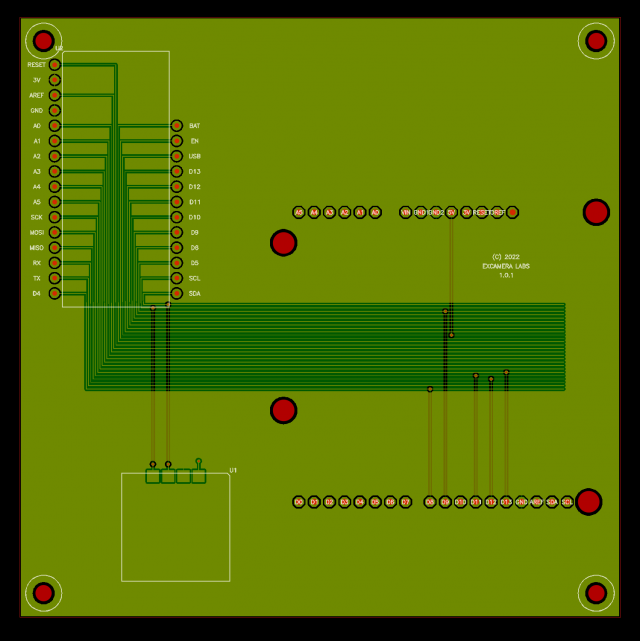
The Feather's signals are all gathered together into a big horizontal bus. Then the Arduino socket pulls the signals off that bus, using vias at the appropriate intersections. There's no other routing.
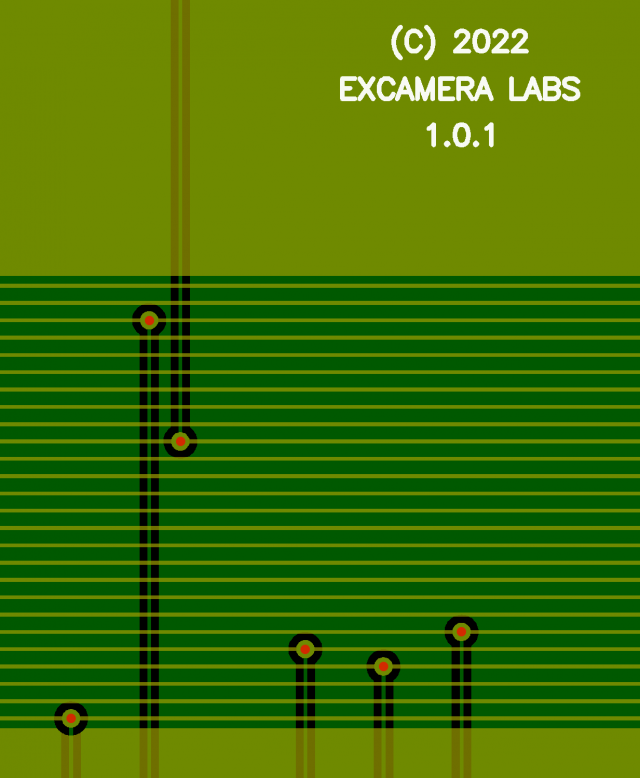
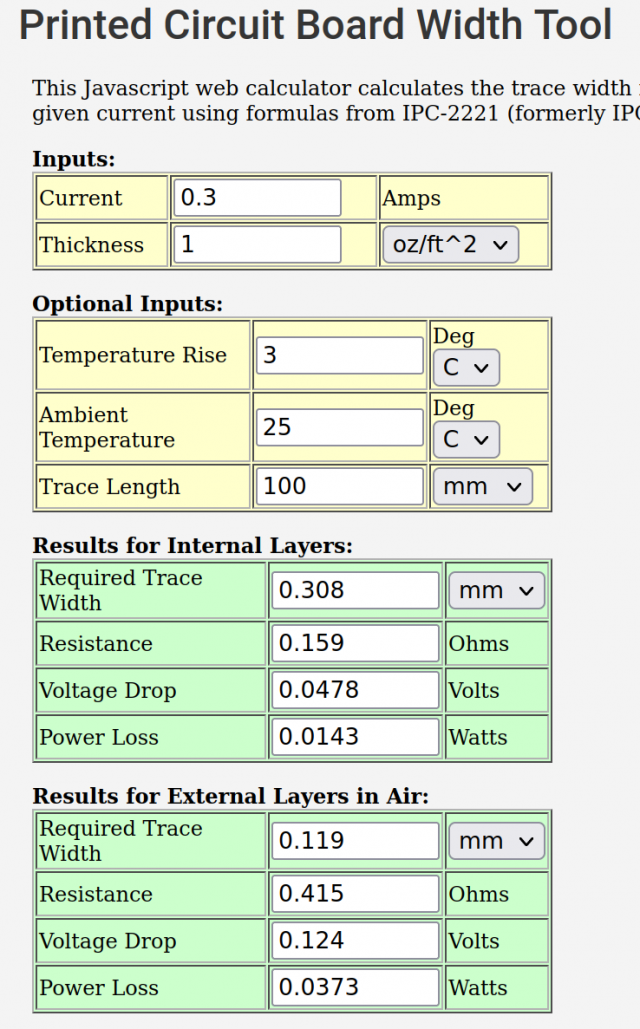
There's not much subtlety to this layout. The bus spacing is exactly right for the board house's design rules. The Gameduino's LCD panel draws about 300mA from the 5V supply. Thinking - as we all do - that power supply lines need to be thicker than signal lines, I checked with a calculator what trace thickness was required. Well, turns out my thinking was wrong. A very skinny trace in 1 oz copper will heat up by a 3C and drop around .1V. So it's not worth bothering with a fatter trace at all... my time is better spent doing something else.
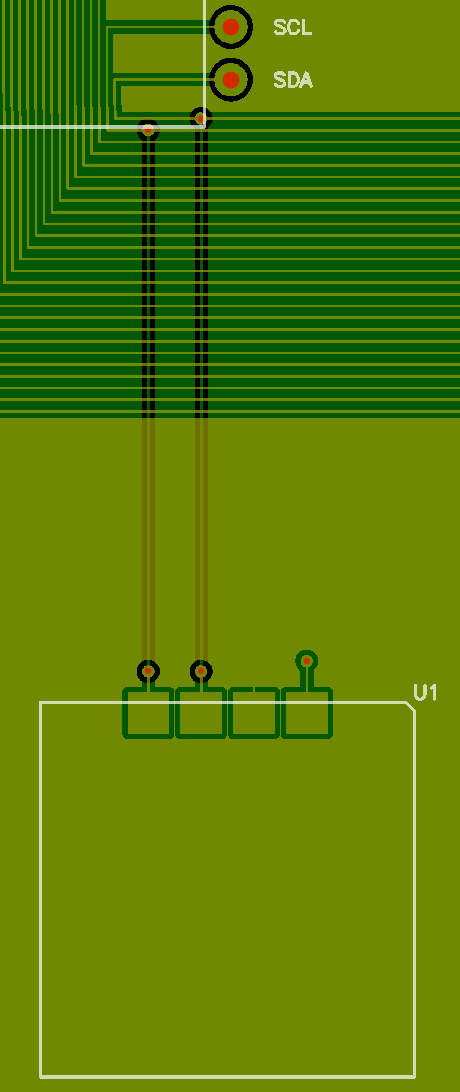
So that's it; a very rudimentary PCB for a prototype. Seeing a bit of empty space in the south-west corner, I dropped in a slot for an I2C module. Again the signal lines just connect straight to the bus. No routing involved.
I'm wondering how far this could be taken. Given a microcontroller and a "shopping list" of peripherals, the tool would create a PCB that lays it all out.
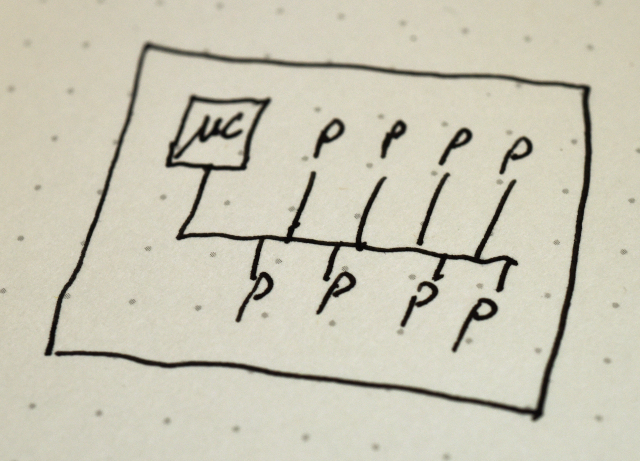
In fact, this software tool could also generate the demo code for all the system's peripherals to run on the microcontroller. Imagine just clicking an "add proto" button in your shopping cart and getting the PCB, the fixings, assembly instructions and the ready-to-run demo code. It would save a lot of people a lot of time. As I understand it, Sparkfun has something like this called "À La Carte", but it costs $949 so I'm assuming that that there are lots of skilled people in the loop. Instead, the simple cases could be automated, and we could all bring our prototype ideas to life so much more easily.
As ever, let me know your thoughts - I always enjoy reading through the replies. Thanks for reading.