Building a kit computer, 41 years late
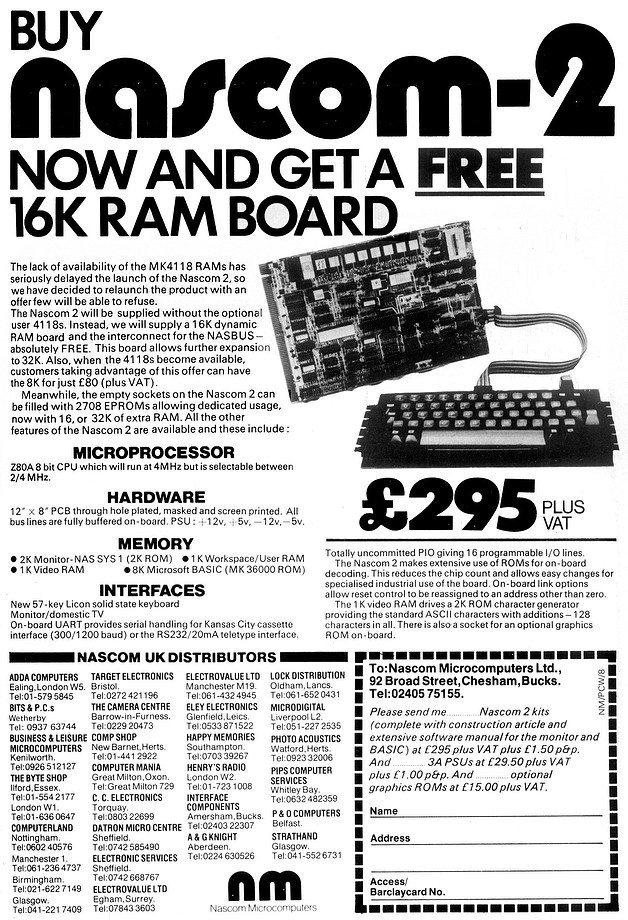
As a child in Britain in the 1970s, I had a pretty comfortable upbringing. We had a house, a car, holidays, and a big color television. But there was no way I was getting a computer. Kits like these ($1300 in today's money!) were far beyond our reach. Assembly was long and difficult, used unfamiliar and new integrated circuits, with no proper guarantee that your computer would work at the end of it. Magazines had whole columns dedicated to debugging your kit computer.
I had to wait until British pioneers Sinclair and Acorn came out with cheaper fully-assembled machines a few years later. But not any more! Now you can buy a Z80 single-board computer kit and have it soldered and running MicroSoft 8K BASIC in about an hour. Here's mine just after it came to life this Sunday morning:
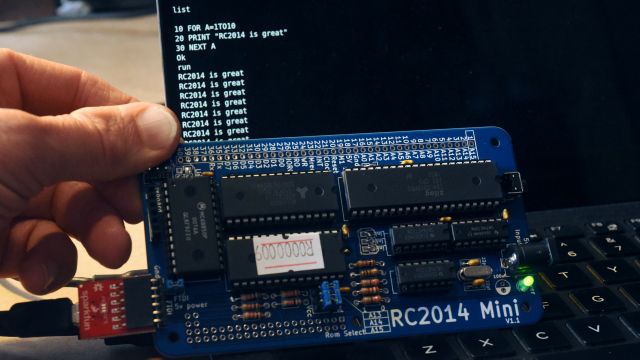
Yes, it's really running that tiny BASIC program shown on the terminal. Good times!
A single board holds the CPU, RAM, ROM, serial interface chip, and the support chips. It's all very authentic - the design is pretty period-accurate. In 1978 we would have plugged it into a serial terminal, or VDU as we called them. In my case it would have been a beat-up Hazeltine 1500 very much like this one:
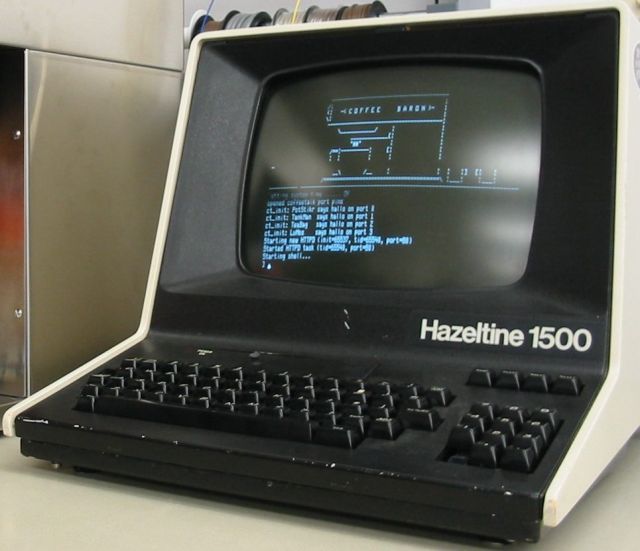
But today everyone uses a PC or laptop and an FTDI UART. This can also power the whole board; it doesn't use much!
So what's next for my little computer? I have got C "hello world' built using the z88dk toolchain. The prolific Philip Stevens explains how it all works with RC2014 here. And there's a bootloader in ROM that lets you load programs into RAM over the UART. You can be hacking up Z80 programs in no time, though with no peripherals it's a text-only experience.
Of course, what I really want to do is get the Dazzler running as a peripheral, with enough software support to let people write code for it.
There will be more on this in coming weeks. Thanks for reading.